
Utah County Owner of Record Fields
Start with the Utah County Assessor Land Records result. That parcel card is the county's own answer to who owns the property on record. It lists the owner name, situs address, mailing address, serial number, subdivision or development, appraisal values, tax history, delinquency and payoff figures, map data, serial history, and links to the recorded abstract. Fields can vary. Check the specific parcel you selected rather than assuming every card shows every item.
| Owner of Record | The name shown on the assessor roll today |
|---|---|
| Situs / Property Address | The physical parcel location |
| Mailing Address | The address used for tax correspondence |
| Serial / APN | The repeat key for linked county screens |
| Appraisal / Values | Assessor value links and history |
| Tax / Deed References | Account and recorded-document routes, when shown |
An owner of record is not always the person living on the parcel. The mailing address on a tax bill can sit somewhere else entirely. The county's own tax-sale notice cautions that it may not match the situs. Treat that address as where the county sends correspondence, not as proof of where anyone lives. The owner name can also be a trust or an LLC. A person often manages the entity behind it.
Utah County Roll Update Limits
Utah County states no day-count. No nightly, monthly, or typical refresh is given for the assessor owner field after a sale. The roll is simply current as displayed. It makes no promise that a just-recorded transfer is already reflected. When a result matters for a purchase or other property decision, be careful. Compare the roll's owner name and serial against the most recent Recorder entry. Also check its recording date.
A gap between those two sources is normal in a live record system. The assessor keeps the tax roll; the Recorder indexes the filed instrument. Note both dates. An unknown processing interval says nothing about when ownership legally changed hands.
Check the instrument's recording date and parties against the assessor's serial and situs fields. The newest deed may be indexed under a trust, a company, or a personal representative. In that case, search the roll using the full recorded name. Add any displayed owner variation. A mailing-address change is not a transfer. An assessor update is not the legal event itself. The deed is the filed conveyance; the roll is the county's current tax record.
Confirm the Current Utah County Owner
Confirming the current Utah County owner takes two records. Check the assessor entry against the newest recorded deed matching the parcel. Utah County Land Records links the serial to property and abstract details. The Recorder's index supplies parties, instrument type, recording date, book/page or entry number, parcel reference, and an image when one exists. Compare the legal description as well as the names.
- Open the current owner field in the Utah County Assessor result.
- Copy the parcel serial and locate its newest likely recorder entry.
- Read the grantor, grantee, recording date, and legal description.
- Check entity filings when the named owner is a company, and keep its legal name exact.
- Compare the roll and deed dates; contact the custodian if they conflict.
- Owner of record
- The party named in the current assessor roll.
- Assessment roll
- The county’s current property and value record.
- Situs address
- The parcel’s physical location, separate from the mailing address.
- Recording lag
- The unreported time between an instrument filing and roll display.
Utah County Owner Names and Entities
An owner name can take many forms. Joint owners, trusts, estates, and limited liability companies all appear in Utah County property records. Search the full name exactly as the roll and deed show it. Initials, punctuation, and entity suffixes can change the results. When a company is named, Utah Commerce's business-entity search may reveal its status, registered agent, and managers. It may also show filing addresses. That filing describes the entity, not the parcel's deed.
Estates work differently. A probate docket may explain the authority behind an executor deed or a distribution. Search Utah Courts Xchange by estate or party. Then confirm the recorded instrument in Land Records. A current-owner review stays with the present roll and the newest instrument. Prior ownership belongs to the backward chain of title.
The Utah business search can help identify the entity name behind a Utah County record.
Utah County Property Watch for Owners
Property Watch lets a subscriber track fully processed recordings by parcel serial or by name and business search. Utah County calls the service free and courtesy-only. It may miss a filing. It is not fraud prevention. For a current owner, the alert helps only after the right parcel is identified. A new email should always lead back to the actual Recorder entry.
Keep the alert record beside the current owner field. Note the instrument date. A subscription never updates or certifies the Assessor roll. It simply prompts you to check a new recording. That prompt may matter after a conveyance, a lien, or a release.
The Utah County Property Watch form describes the serial and name subscription.
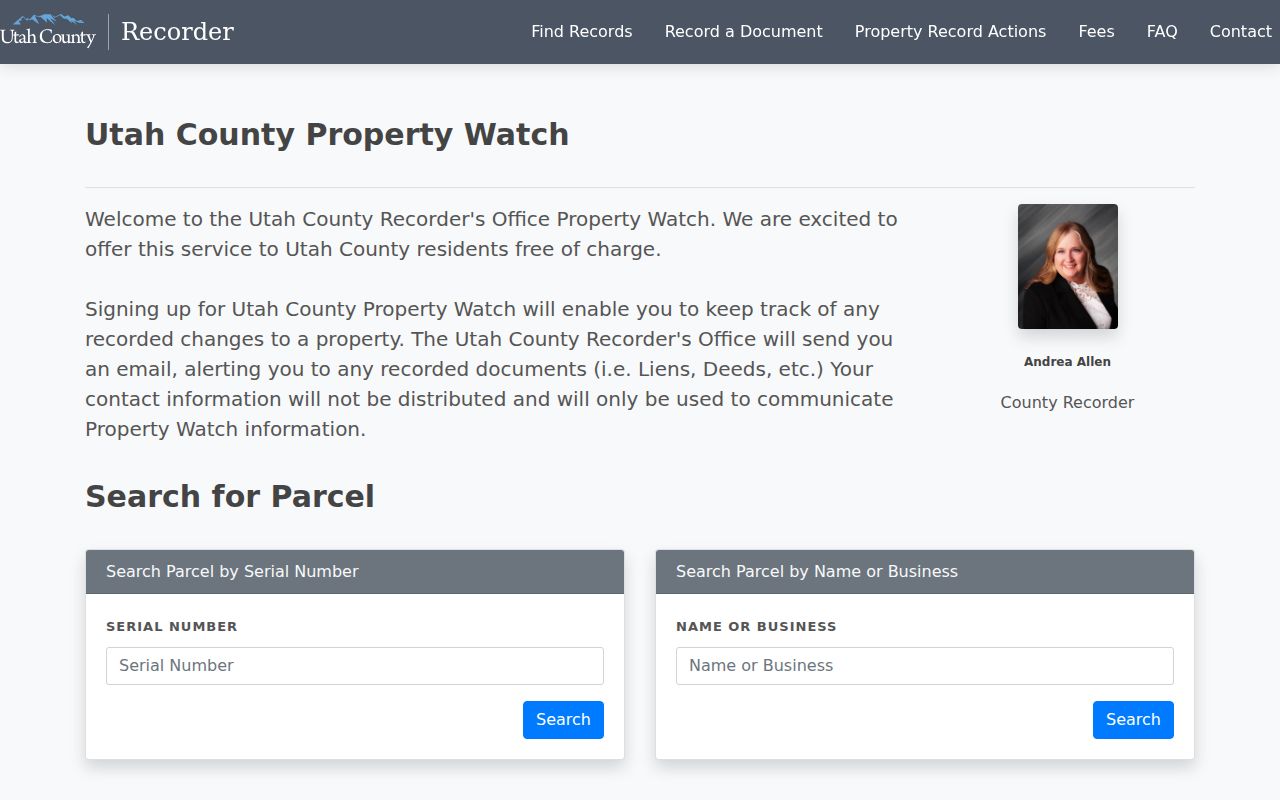
Use the alert to review a new instrument, never to replace the owner-of-record and deed check.
Utah County Tax-Sale Address Clue
Utah County tax-sale rows pair the current owner with a mailing address, parcel data, and payoff figures. The county warns that this address may not be the property address. An address field can mark where notices go rather than where the land sits. That gap matters on any owner screen. Owners move. So confirm the situs in the Assessor or Parcel Map before tying an owner to a location.
A sale row is a starting point. Check the parcel's present tax state with the Treasurer. Then pull its latest recorded deed from the Recorder. A public sale row is not a completed transfer, and it is not a title opinion. Keep dates and source labels intact when comparing those records.
The tax-sale list is a clue to a parcel's account status, not a shortcut to the present owner. Compare the notice year, serial, owner name, and payoff date with the live Treasurer result. If the county records a tax deed or another conveyance later, read that instrument. Check whether the assessor card has caught up. The dates carry the real story. Keep the tax, deed, and roll records separate until the documents establish how they relate.
Serial history can point to a split, a combination, or a successor parcel. Verify that the deed reference describes the same land. A shared surname or mailing address alone proves little. The serial, legal description, recording date, and source label are the practical cross-checks. Ask about unprocessed transfers there too.
Utah County Assessor Contact Route
The Utah County Assessor sits at 100 East Center Street, Suite 1100, in Provo. The phone line is 801-851-8295, and email goes to assessor@utahcounty.gov. Doors open weekdays, 8 a.m. to 5 p.m. The office sets value and handles exemptions. Its limits are real. Title searches and some name or address changes fall outside its work, so send document questions to the Recorder and payment status to the Treasurer.
An owner field sometimes looks incomplete. Have the serial and situs address ready before asking for help. Ask for the record, not a ruling. The assessor cannot decide legal ownership. The Utah County Land Records directory opens the live parcel search and its owner and valuation screens, with appraisal, map, and tax detail on separate paths.
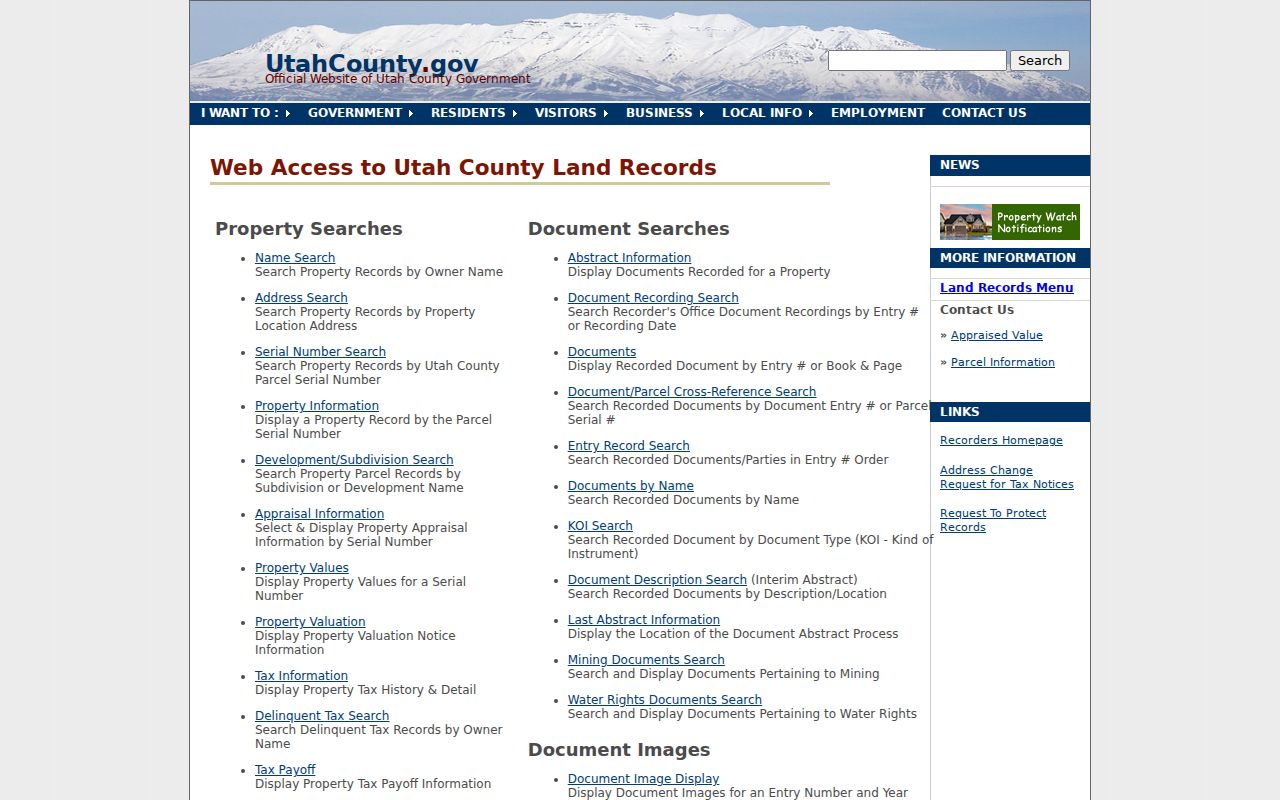
Start with the county's live parcel card for the current owner field. Confirm any recent transfer with the Recorder.
Use Utah County Owner Details Carefully
Public property data answers lawful property questions. Utah's Safe at Home Address Confidentiality Program can substitute assigned addresses, and other protected details may be redacted under law. A missing location can be a privacy safeguard, not an error. Never infer a private residence from other records. For the general method, the Utah County owner search route walks the address-to-roll-to-deed sequence. Older transfers call for the former-owner chain. The current owner card is not a title history.
Lawful use. Use Utah County owner records for property diligence and civic research. Never use a name or mailing address to stalk, harass, or harm anyone.