
Follow a Utah County Property Search
Utah County gathers its assessor search modes and most recorder links under Land Records. Address Search is the plain-language entry for a home or commercial site. Name Search can surface multiple holdings tied to one person or business. Serial Number Search is the exact route once a parcel is known. One serial then opens property information. That includes appraisal, values, tax, delinquency, and payoff. The map, history, and document cross-reference open too.
Keep the search orderly. Capture the address result and serial first. Then open only the detail your question needs. Ownership questions call for the owner field and the latest deed reference. A buyer studying site context may add the plat and GIS map. Tax questions turn on the value year, exemption, and bill period. This property search is the index route. It is not a full review of deeds, boundaries, or taxes.
- Open Utah County Land Records and choose Address Search, Name Search, or Serial Number Search.
- Record each possible serial and compare situs, subdivision, and legal-description details.
- Open Property Information and Appraisal Information for the selected Utah County parcel.
- Carry the serial to tax, map, serial history, and Recorder cross-reference only as needed.
- For an older or missing record, ask the office about the related book, plat, image, or archive channel.
Utah County Address Search
Address search is the fastest route into Utah County property records. It works best when you know the street location. The assessor search accepts a property-location address. The Parcel Map takes an autocomplete address field. That field handles common place names plus suffix and direction abbreviations. A unit can return more than one record. A renamed street can send a search astray. A changed address, or a situs that differs from the tax-mail address, can also send a search astray.
Compare the returned situs with the property you mean. Keep the unit number, direction, and suffix with the result. When two Utah County parcels look alike, sort them by subdivision, legal description, map location, and serial rather than by name alone. If the address field finds nothing, shorten the street name or switch to owner and serial modes. The county publishes no guaranteed list of address synonyms or result limits.
The Utah County Land Records directory lists the address and owner search modes. Its search screen is a fine first step. The parcel detail is where the serial and the separate record links appear.
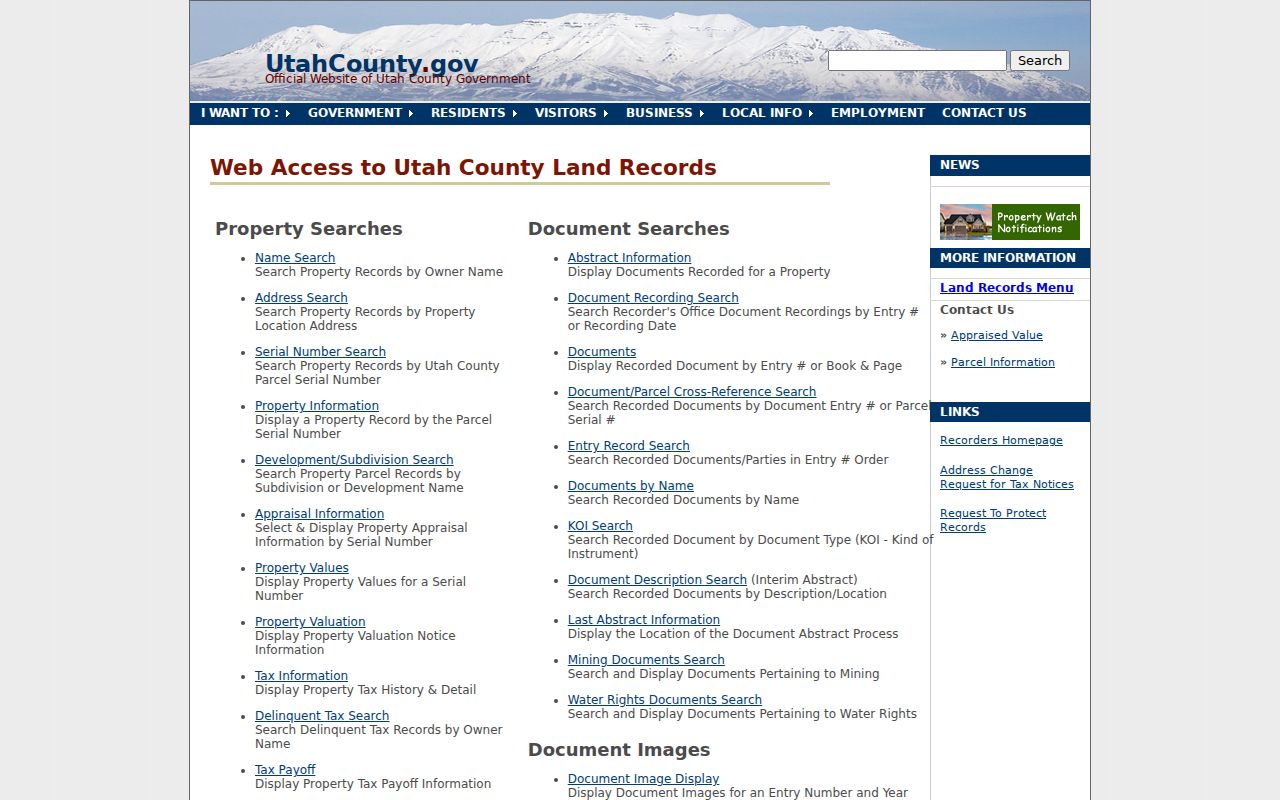
Use the directory view to pick a search mode. Then carry the chosen serial into the deeper Utah County screens.
Search Utah County by Owner Name
Name Search shines when a person or company may hold more than one Utah County parcel. It can also miss when the recorded name differs from the spelling you typed. Initials, middle names, married names, punctuation, trust labels, and LLC suffixes all change what appears. Try the full name and a sensible partial form. Then compare parcel addresses. Do not assume every hit belongs to the same person.
The Recorder's Documents by Name mode is separate from the Assessor's owner-name search. One describes recorded parties on instruments; the other describes the current roll. A deed can show a grantee not yet reflected in the roll. A roll result, in turn, may group a property under a trust or company name. Utah County states no update interval for the assessor roll. So a recent sale deserves a deed check.
Utah County Serial Search Modes
The serial is the most useful repeat key in a Utah County property search. It links the assessor card to appraisal and values. It also reaches the valuation notice, tax, delinquent tax, payoff, the map, and serial history. The Recorder cross-references documents by serial or entry number. Property Watch accepts a serial or a name and business search too. Save leading zeros and punctuation exactly as displayed. Another screen may take an alternate format.
Parcels can split, merge, or receive a changed number. Serial History and the older legal description then connect the present record to a parent parcel. The county does not explain any internal city prefix or map-book code in the serial. Do not infer a place or lot from its digits. Search the exact serial first. Use the map or plat to check geography.
Fields in Utah County Land Records
Utah County's search-field inventory is a set of named modes. It is not one form with every filter. Pick the mode that fits your key. Follow its result into the parcel detail. A property search can return separate links instead of one complete record card. The screen labels are the county's own menu terms. Each comes with its documented key or result.
| Field or mode | Type | Use |
|---|---|---|
| Name Search | Owner/property name | Search roll by person or business |
| Address Search | Property location | Find a situs-address match |
| Serial Number Search | County parcel serial | Open the exact parcel record |
| Development/Subdivision Search | Named development | Find records tied to a project name |
| Document/Parcel Cross-Reference | Serial or entry number | Connect the parcel and recorded document |
Appraisal, Property Values, Tax Information, Tax Payoff, Parcel Map, and Serial History each open by serial. Land Records also lists recorder tools. Those include Document Recording Search, Entry Record Search, Documents by Name, KOI Search, and Document Description Search.
What a Utah County Property Record Shows
A Utah County property records result ties together details that usually live in separate systems. One lookup can surface the owner of record, the situs address, and the parcel serial. The subdivision or development name can appear as well. It can also carry the assessor's valuation and the current tax figure. A map reference and a recorded abstract may round out the result. Not every parcel card fills in every field. Treat a blank last-sale or improvement line as a gap in that record. It is not proof that nothing exists. The Recorder entry stands apart with its own fields. It often opens from a document cross-reference.
| Owner of Record | Name shown on the assessor roll |
|---|---|
| Situs / Mailing Address | Physical parcel and separate tax-mail address |
| Parcel Serial | Utah County key for linked screens |
| Appraisal / Values | Market, assessed, taxable, and history links |
| Tax detail | History, delinquency, and payoff routes |
| Map / document trail | Parcel Map, Serial History, abstract, or cross-reference |
Know what a result does not tell you. It does not prove clear title. It does not settle a legal boundary, a market price, or who occupies the property. The record only reports what the county screen or the recorded instrument makes available. For a fresh transfer, confirm the latest deed entry, and for a boundary dispute, hire a licensed surveyor. The Utah County Recorder does not perform title searches.
Read Utah County Addresses Correctly
Read the address labels with care. The situs address is where the parcel sits. The mailing address is where the owner receives tax notices. Those two can differ for trusts, business property, a second home, or a tax-sale record. Utah County's own sale material flags this distinction. So never assume the address beside an owner's name marks the parcel's physical location without checking the field label.
The GIS map is often more forgiving than a recorded-document search. A street suffix or direction can trip up a recorded-document search instead. When the result list shows similar addresses, confirm the parcel outline on the map. Check the serial there too. Older deeds may describe the land as a townsite block, a subdivision lot, or metes-and-bounds text. They may not use a modern street address. Keep both forms in your notes.
Utah County Value and Tax Links
The value side and the bill side live in different places. Property Values and Valuation Notice links show assessor figures. Tax Information and Tax Payoff show the bill. A primary residence can earn a 45% exemption. An eligible person must occupy it for at least 183 consecutive days. The Land Records search will not explain why a figure changed. Compare the value year, the exemption, and the tax period. Do this before lining up two Utah County parcels side by side.
A delinquent payoff is date-sensitive. Interest is computed daily. So preserve the serial and the selected payoff date with any result. The Utah County property tax records page covers the exemption, the notice calendar, appeals, and the sale list. This page stays focused on finding the correct parcel record.
Use Utah County Map and GIS Downloads
The Utah County Parcel Map accepts several search keys. You can query it by address. It also takes a serial, book and page, owner name, city, or PLSS section. The county's GIS data page advertises downloadable tax parcels, building footprints, address points, and more. It does not publish the formats, update dates, license terms, or fees up front. A downloaded layer can support area review. It should never replace a parcel-specific record or a survey.
In a property search, the map works best as a cross-check. The address should land near the expected lot. The selected polygon should return the serial already saved from Land Records. If the two disagree, look closer. Multiple units, a parcel split, a city edge, or an address mismatch could explain it. The live viewer shows its own search panels and tools. It carries the current layers. The map is a key for finding the parcel. The deed and assessor screens carry the record details.
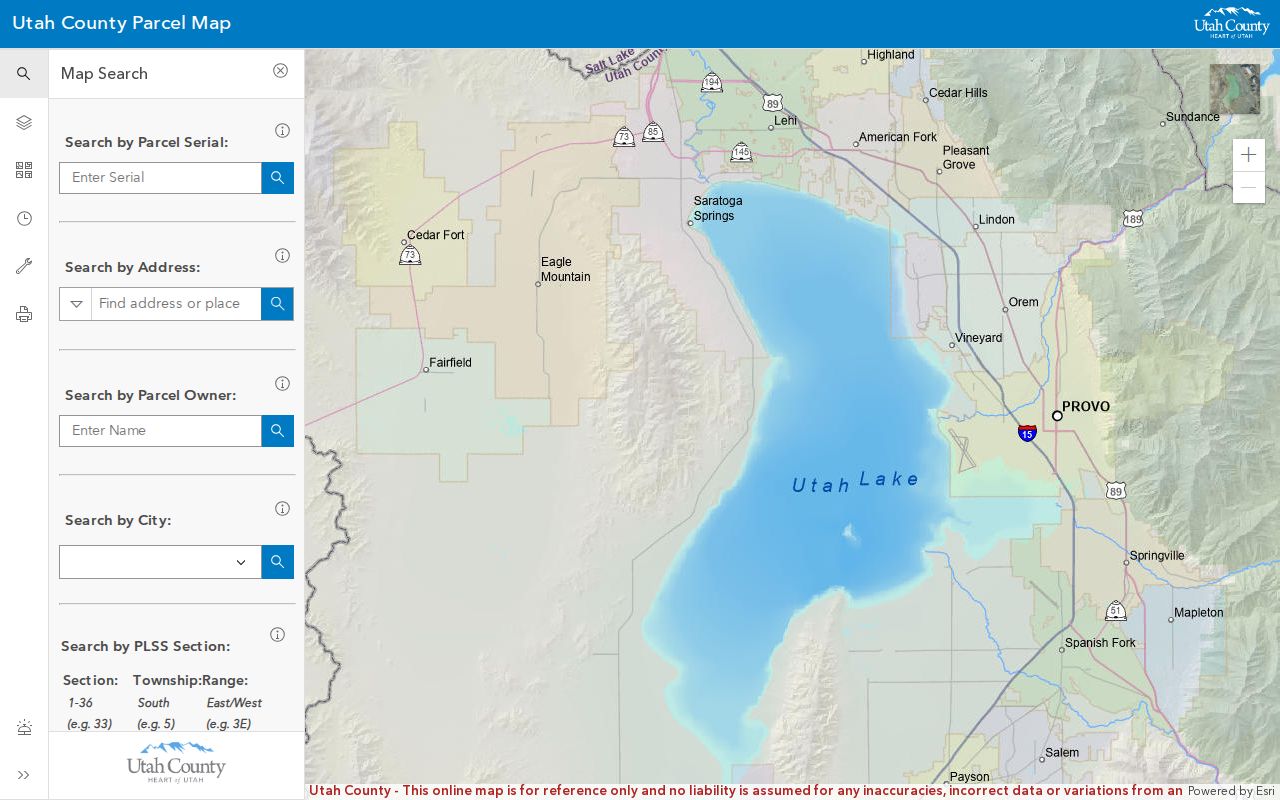
Copy the parcel serial; reopen the Land Records view.
Choose a Utah County Search Key
The best Utah County property search key depends on what you already know. It also depends on how exact the answer must be. An address is the natural first try. A name suits a portfolio review. A serial is the strongest key for a repeated cross-check. No single key replaces confirming the right parcel. Compare the record's situs, legal description, and city before moving to another screen.
| Search Key | Best For | Where It Works | Watch Out |
|---|---|---|---|
| Address | A known site or unit | Land Records and Parcel Map | Multiple parcels, renumbering, or situs mismatch |
| Owner name | Several holdings under one name | Land Records and Recorder Documents by Name | Trusts, LLCs, punctuation, and same names |
| Parcel serial | Exact parcel follow-up | Assessor, tax, GIS, Recorder cross-reference | Splits or mergers can change the key |
Not a title search. A Utah County property search brings back indexed records and current roll data, not a guarantee of clear title. A title professional reviews the chain and exceptions.
When Utah County Search Needs Help
Online access does not reach every year or every image in the same way. The official Land Records pages state no earliest recorder index year. When a Utah County property search comes up empty, retry the name in another mode. Use the serial or book and page if you have it. Ask the Recorder about abstracts, plats, or older books. The Recorder's published contact is 100 East Center Street, Suite 1300, Provo. The phone line is 801-851-8179.
For non-land records held by an agency, GRAMA is the state request path. Describe the record and parcel in enough detail for the custodian to find it. In a court dispute, search Xchange by party or case. Or use the public courthouse terminals when online access is not a fit. Utah County libraries, BYU, FamilySearch, and the State Archives offer further routes. They can open doors into older land material.