
Identify a Utah County Property Owner
The dependable path runs from place to parcel to recorded transfer. Begin with a situs address or a name already tied to the land. The Assessor Land Records result supplies the owner of record and the serial. The Recorder index then names the latest grantee. An LLC, trust, or estate sometimes appears. Run that exact name through its own public record source. The goal is the record holder. Occupancy is a separate question that the roll alone cannot settle.
- Search the address or owner in Utah County Land Records and note matching serials.
- Open the owner-of-record field and keep the situs and mailing addresses distinct.
- Use the serial or party name in the Recorder index to find the latest likely deed.
- Compare the deed’s grantee and legal description with the assessor parcel.
- If the grantee is an entity, search the official Utah business-entity record for its filing details.
Where Utah County Owner Information Comes From
Utah County splits ownership data across several sources. The assessor roll lists the current owner of record. The Recorder index names parties to a recorded instrument. GIS places a parcel and carries an ownership reference, while a state entity filing may add detail about a company named as grantee. No single source stands in for a complete title opinion.
| Source | Owner Info It Gives | Access |
|---|---|---|
| Assessor / tax roll | Owner of record and mailing/situs context | Land Records by address, name, or serial |
| Recorder deed index | Grantor, grantee, instrument, and recording date | Name, parcel, KOI, or entry search |
| Utah business search | Entity status, agent, managers, and filings where shown | Utah Commerce entity search |
| County GIS | Parcel location and ownership reference | Parcel Map selection |
A public roll names the record owner. The person living there may be someone else entirely. Mailing details live in a separate field. They can point elsewhere, and the county's own tax-sale material warns that an owner mailing address may not match the property's situs. Treat those fields as a way to tell the parcel from a correspondence address, not as a basis for guessing who occupies it.
Utah County Deed Confirmation
A recorded deed provides the second check. Search the owner name or parcel serial under Documents by Name or the Document/Parcel Cross-Reference. The entry shows the recording date, party names, instrument type, book and page or entry number, parcel reference, and legal description. The assessor roll publishes no fixed update interval. After a recent sale the newest deed can outrun it.
Check the instrument itself when an image is available. A brief index entry drops details that matter. The Recorder preserves documents but does not search title or interpret legal terms, and the Utah County deed record process explains the index, deed types, and copy choices.
The Utah County Land Records directory links the name and parcel document modes. Start there with the serial saved from the assessor result. That one number ties the whole search together.
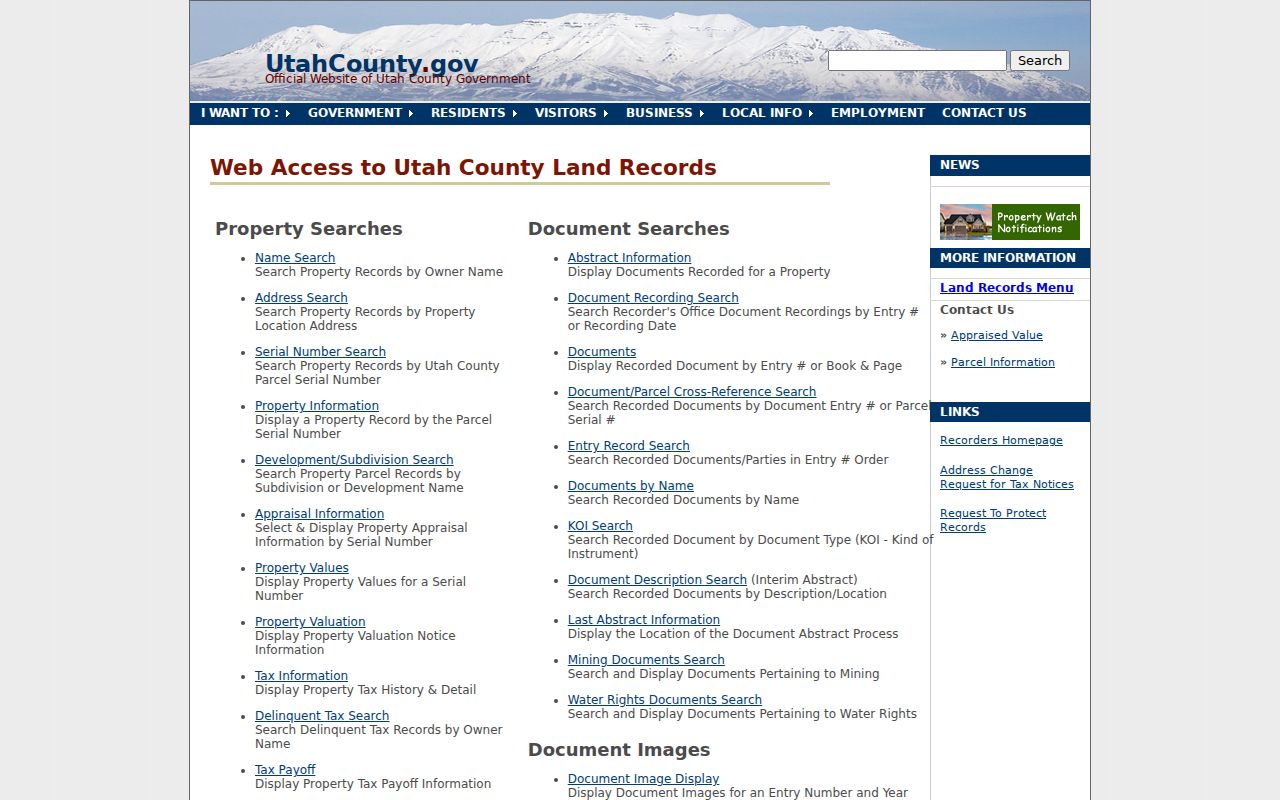
The county entry point ties an owner search together. It links property, tax, map, and document screens in one place.
Utah County LLC and Trust Names
Plenty of Utah County parcels list an LLC, trust, estate, or several co-owners. Search the name exactly as written, punctuation and suffixes included. Utah Commerce's business-entity search may surface a filing, status, registered agent, or manager detail. That helps pin down the legal name behind the recorded party.
Estate property often moves through a probate docket first. A later executor or heir deed completes the transfer. When a court matter matters, search Xchange by the decedent or estate name. Then look for the recorded conveyance in Land Records. Death records are separate, with recent certified copies restricted. An obituary or directory occupant is never the deed holder.
The official Utah business-entity search is the state source. It covers company filings named in a deed.
Match the full legal name and the deed's recording date. Do this before tying an entity filing to a parcel. A registered agent or manager entry can clarify which organization appears in a recorded instrument. It cannot replace the grantor and grantee language. Nor does it establish every beneficial interest. An active state registration does not prove the company still owns a particular Utah County parcel. Resolve the name with the state filing. Then use the county deed and current roll to connect that name to the land.
Keep the capacity the instrument states. Trustee, personal representative, executor, or heir may appear beside a person or entity name. Search each form as its own name variant. Confirm the recorded legal description too. A court docket explains who had authority to transfer. The Recorder's instrument, by contrast, documents the conveyance actually filed with the county. The two records answer related questions, and neither should be read as the other.
Utah County Mailing and Situs Fields
Situs is where the land actually sits. Mailing is where tax notices go. A Utah County owner can list a mailing address in another state. Sale-list rows often show that address next to the parcel number. Before drawing conclusions, confirm the owner of record against the deed and use the GIS map to place the situs. A tax bill address alone never proves anyone lives there.
Some owners qualify for address protection. Utah's Safe at Home program issues participants an assigned address. Agencies may redact a real one under applicable law. So a public record may omit or swap a field. Trust the recorder's own labels over what a search result assumes about an entry.
Utah County Property Watch Follow-Up
Once the parcel is confirmed, subscribe to Property Watch. You can subscribe by serial number or by a name and business search. When a fully processed recording touches the subscription, Utah County sends an email. The county calls it a free courtesy alert. It can miss a filing. It is not fraud prevention. Treat each notice as a prompt. Pull the new instrument from the Recorder index and read the deed itself.
Keep the Property Watch serial matched to the deed and current parcel number. A broad name alert can fire on a different holding or an entity name variation. The alert adds a later signal to a known Utah County record trail. It never replaces the owner check or a full review of the recorded document. The Property Watch subscription page describes the name and serial fields.
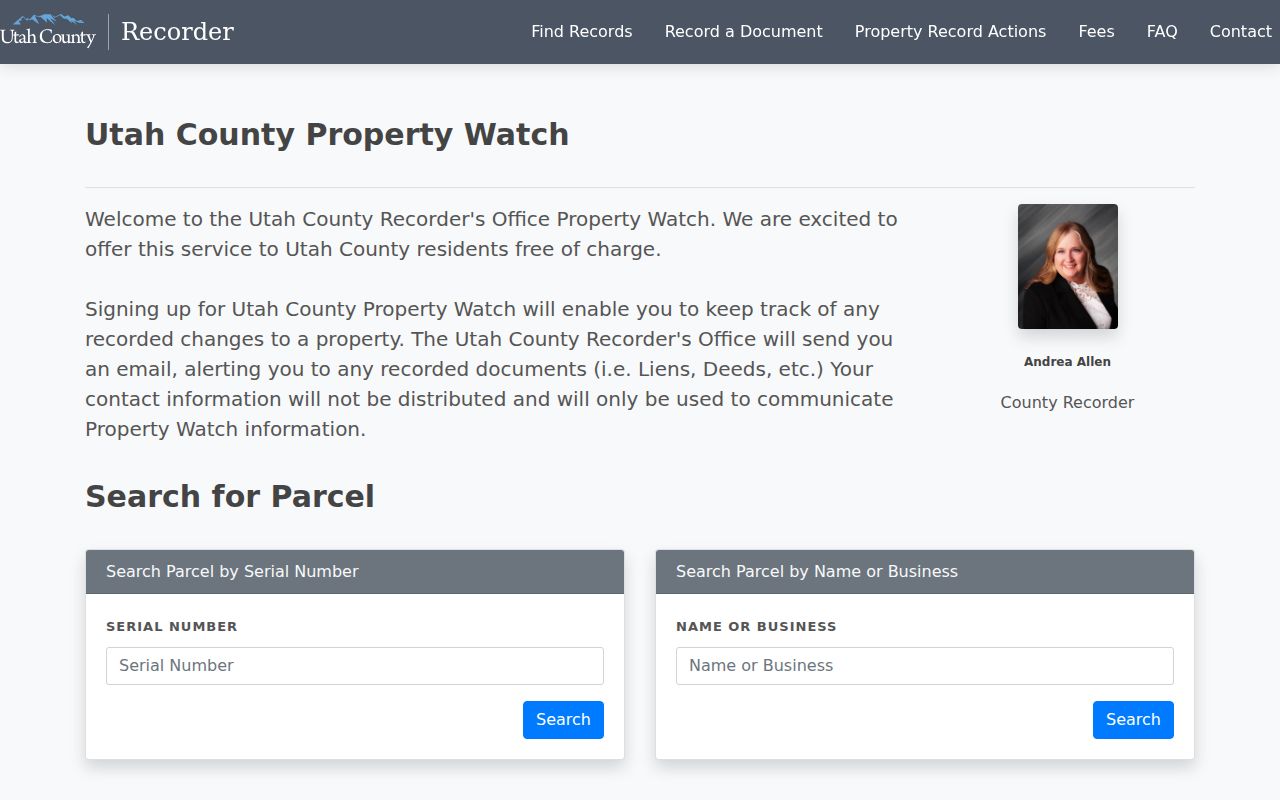
Check the actual entry after an alert before drawing a conclusion about ownership.
Utah County Protected Address Limits
Utah's Address Confidentiality Program, Safe at Home, gives protected participants an assigned address for public use. State and local agencies may redact an actual location or substitute the assigned one under the rules that apply. So a missing street address on a Utah County result may reflect a lawful protection or the scope of the public record. It is not a search error.
GRAMA access also turns on how a record is classified. Direct any record request to the agency that holds it, and describe the parcel, the document type, and the period with care. Never use a public mailing address to infer where someone lives or to contact a person outside a proper property matter. When the question is simply the owner shown today, keep the tax roll and the deed evidence together; the current owner record page focuses on the assessor field and its update limits.
A public search shows only the fields that source exposes. If an address is assigned or withheld, do not try to rebuild it from directories, court filings, or map layers. For a GRAMA request, ask the custodian to identify the record sought. Follow the response on access, inspection, or copies. Statutory classifications and privacy protections may affect what gets released. The county can explain its own record.
Limits of a Utah County Owner Lookup
A Utah County owner lookup shows names in public records. That is its limit. It cannot establish who lives at a property. It cannot confirm whether every interest was recorded. It also cannot tell you whether title is clear. GRAMA, privacy law, and the state Safe at Home program all restrict some personal information. Do not republish details beyond what a lawful property question requires.
Lawful use. Use Utah County records for property research, purchase diligence, and civic purposes. Do not use an owner’s name or address to stalk, harass, or harm anyone.